The Docket - Case No. 3
The $90,000 Instagram post
Kendall Jenner did the post and got paid. Three years later, the Fyre Festival bankruptcy trustee came for the money anyway.
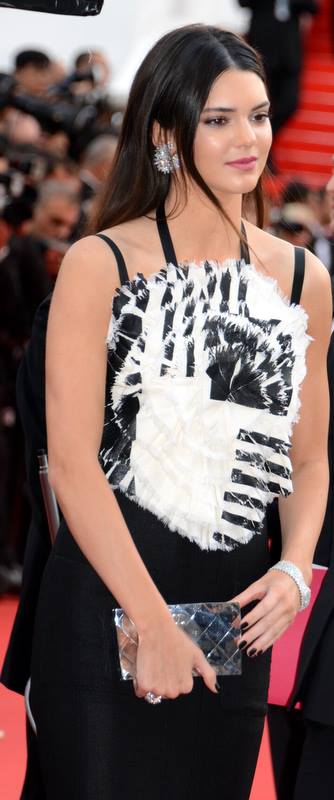

In January 2017, Kendall Jenner published a single paid Instagram post promoting the Fyre Festival, the luxury music festival planned for the Bahamas that spring. The festival collapsed in April 2017 amid fraud that later sent its founder to federal prison. In August 2019, Gregory Messer, the Chapter 7 trustee for the Fyre Festival LLC bankruptcy estate, sued Jenner and her company, Kendall Jenner Inc., in the U.S. Bankruptcy Court for the Southern District of New York. He sought to avoid and recover $275,000 in transfers as allegedly fraudulent, under federal bankruptcy law and New York debtor and creditor law.
She had done the work. She had been paid. The trustee sued anyway.
What the papers say
The trustee's complaint says Fyre's organizers entered into an agreement with Jenner under which she would make a single social media post promoting the festival in exchange for $250,000. The trustee identified $275,000 in aggregate transfers to Jenner, her company, or their agents as potentially avoidable, and asked the court to claw the money back for the benefit of the bankruptcy estate's creditors.
The complaint added a second allegation that should interest every creator reading this. It said Jenner's post failed to include any indication, as Federal Trade Commission guidelines require, that she had been paid to promote the festival. It further alleged that Jenner never informed the public that she had no intention of attending the festival, or that she ultimately decided not to attend. The defendants denied liability.
On May 19, 2020, the trustee filed a notice of settlement: Jenner and her company would pay $90,000 to resolve the claims, with the settlement presented to the bankruptcy court for approval under the court's avoidance-action procedures. The notice is a public filing, docketed as document 183 in the main bankruptcy case.
The money
$250,000 was the agreement. $275,000 was the clawback demand. $90,000 was the settlement. Jenner kept most of the fee and paid roughly a third of the demand to make the case go away, without admitting liability.
The arithmetic reflects how these fights actually resolve. The trustee's leverage is fraudulent-transfer law: money a collapsing company paid out before bankruptcy can sometimes be pulled back into the estate. The creator's leverage is that she performed, the transfer was for real consideration, and litigating the question to judgment costs the estate money it is trying to recover. Both sides discount for risk and cost. $90,000 was the number where those discounts met.
The ruling
There was no ruling on the merits. The case settled, the defendants denied liability, and the bankruptcy court's procedures governed approval of the deal. That is the ordinary ending for avoidance actions against paid promoters: the trustee recovers something, the creator pays something, and no court ever decides whether the transfer was actually fraudulent.
But the complaint's FTC-disclosure allegation is the part that outlives the settlement. Even inside a bankruptcy clawback fight, the trustee reached for the missing disclosure as part of the story. The post was from January 2017. The allegation about it was still being filed in August 2019.
The risk ledger
Brand-deal risk has two directions, and creators usually only price one. The familiar direction: will the brand pay me. The unfamiliar direction, the one this case illustrates: if the brand collapses, will the brand's creditors come after what it already paid me. A fee that cleared your bank account years ago can become a lawsuit.
The second ledger item is the disclosure. The trustee's complaint treated the missing FTC disclosure as part of the factual case against the promotion itself. A disclosure line costs nothing at posting time. Years later, its absence becomes a paragraph in someone else's lawsuit.
The third is counterparty diligence. Fyre Festival was, by January 2017, already showing the strain that became the collapse. Creators cannot audit a sponsor's balance sheet, but they can ask harder questions about new companies offering large fees for light deliverables, and they can structure payment timing so less of the fee sits exposed if the sponsor fails.
Why it matters for creators
Most creators think of brand-deal risk as reputational: the sponsor turns out to be a scam and your audience sees you promoted it. This case adds a legal dimension most never consider. When a sponsor enters bankruptcy, a trustee's job is to pull money back into the estate, and creator fees are on the list. Defending a clawback action means hiring bankruptcy counsel to fight over money you already earned and already spent.
This is the category of surprise legal bill that professional and media liability coverage exists to address: not the predictable costs of doing business, but the litigation that arrives from a direction you never priced. Whether any particular claim would be covered depends on the policy as issued, its terms, conditions, limitations, and exclusions, and the facts of the claim. No promises here. But the lesson of the $90,000 post stands on its own: in the creator economy, the deal is not over when the post goes up. It is over when nobody can sue over it anymore.
The docket
- Trustee's notice of settlement of claims against Kendall Jenner Inc. and Kendall Jenner, filed May 19, 2020 (Bankr. S.D.N.Y., main case No. 17-11883-mg, Doc. 183): s.wsj.net/public/resources/documents/Kendall Jenner settlement.pdf
- Davis+Gilbert alert summarizing the trustee's complaint, "Kendall Jenner Pays $90,000 to Settle Bankruptcy Claim Over Fyre Festival Post," May 2020: dglaw.com/kendall-jenner-pays-90000-to-settle-bankruptcy-claim-over-fyre-festival-post
Legal disclosure
CreatorSure is a creator-facing brand of SongSure LLC, an insurance agency. This article is for general information and education only. It is not legal advice, not insurance advice, and not an offer, quote, or promise of coverage. Case summaries rely on public records and may omit details. Any future coverage would be subject to underwriting review, carrier approval, and the terms, conditions, limitations, and exclusions of the policy as issued. Past case outcomes do not predict future results or coverage decisions. CreatorSure and SongSure are in pre-launch and are not currently writing coverage. Consult a licensed attorney for legal questions and a licensed insurance producer for coverage questions.